" width="111.9999962445181px"><path d="M 32.214 27.81 C 29.413 28.127 27.106 25.981 26.263 24.309 C 29.64 22.269 31.894 18.888 31.564 14.128 C 31.011 6.156 24.745 -0.185 16.753 0.004 C 8.764 0.194 2.899 6.826 2.629 14.816 C 2.489 18.958 4.5 22.027 7.518 24.001 C 6.728 25.681 4.962 27.998 1.557 28.26 C -0.464 28.416 -0.553 31.448 1.499 32.547 C 3.406 33.489 5.179 32.387 6.616 30.885 C 7.973 29.468 9.783 26.506 10.409 25.455 C 11.084 25.71 11.775 25.923 12.476 26.094 C 11.603 29.927 10.488 31.074 8.65 31.874 C 6.641 32.748 7.785 35.601 10.154 35.913 C 11.98 35.938 13.54 34.38 14.461 32.563 C 15.33 30.85 15.56 28.879 15.734 26.594 C 16.536 26.652 17.341 26.661 18.145 26.624 C 18.441 28.423 19.017 31.373 19.788 32.789 C 20.783 34.617 22.21 36.321 24.315 35.913 C 26.598 35.538 27.105 32.453 25.006 31.659 C 23.338 31.028 22.19 28.405 21.396 26.199 C 22.063 26.054 22.716 25.873 23.35 25.656 C 24.075 26.56 26.355 29.512 27.924 30.748 C 29.557 32.035 31.215 33.134 32.973 31.935 C 34.851 30.561 34.231 27.581 32.216 27.809 Z" fill="rgb(223, 58, 122)" height="35.97383707394391px" id="aYEItCCef" width="34.09906300781561px"/><path d="M 22.301 0.379 C 19.182 0.453 16.408 2.383 15.253 5.281 C 13.941 1.483 9.969 -0.708 6.056 0.207 C 2.143 1.122 -0.444 4.848 0.064 8.834 C 0.571 12.82 4.011 15.777 8.028 15.682 C 11.179 15.608 13.979 13.655 15.137 10.724 C 16.399 14.342 20.106 16.503 23.876 15.819 C 27.646 15.134 30.357 11.807 30.266 7.976 C 30.164 3.679 26.598 0.278 22.301 0.379 Z" fill="rgb(255, 255, 255)" height="15.944536019416944px" id="R9x6R4DYP" transform="translate(1.956 5.868)" width="30.268501390304902px"/><path d="M 0.99 0.022 C 0.543 0.04 0.169 0.52 0.044 1.17 L 0.885 1.514 L 0 1.719 C 0.024 2.602 0.483 3.296 1.039 3.274 C 1.597 3.254 2.042 2.508 2.027 1.609 C 2.015 0.712 1.549 0.001 0.991 0.022 Z M 9.34 0.001 C 8.893 0.017 8.519 0.497 8.394 1.148 L 9.235 1.493 L 8.35 1.696 C 8.374 2.58 8.833 3.274 9.389 3.252 C 9.948 3.231 10.392 2.487 10.377 1.588 C 10.365 0.69 9.899 -0.022 9.341 0.001 Z" fill="rgb(223, 58, 122)" height="3.2743488808043786px" id="MxAMFLEQ7" transform="translate(11.736 12.714)" width="10.377699041974104px"/><path d="M 21.686 0.204 L 21.522 0.206 C 19.724 0.244 18.016 0.999 16.779 2.304 C 15.647 3.485 14.985 5.038 14.916 6.672 L 13.821 6.672 C 13.69 2.987 10.61 0 6.918 0 L 6.752 0.003 C 2.936 0.097 -0.083 3.262 0.002 7.078 C 0.09 10.799 3.19 13.828 6.909 13.828 L 7.075 13.826 C 8.91 13.788 10.654 13.017 11.916 11.686 C 12.997 10.558 13.661 9.095 13.798 7.539 L 14.932 7.539 C 15.22 11.003 18.166 13.757 21.679 13.757 L 21.843 13.754 C 25.577 13.666 28.543 10.555 28.457 6.82 C 28.391 3.134 25.373 0.185 21.686 0.204 Z M 13.039 7.097 C 12.998 8.609 12.396 10.052 11.349 11.144 C 10.229 12.323 8.685 13.006 7.059 13.04 L 6.908 13.042 C 3.611 13.042 0.864 10.358 0.786 7.06 C 0.71 3.678 3.386 0.872 6.768 0.788 L 6.919 0.786 C 10.205 0.786 12.945 3.456 13.039 6.742 L 13.039 7.098 Z M 21.825 12.985 L 21.679 12.987 C 18.447 12.987 15.756 10.356 15.68 7.123 C 15.637 5.53 16.234 3.986 17.336 2.835 C 18.433 1.679 19.946 1.01 21.539 0.976 L 21.686 0.974 C 24.954 0.956 27.63 3.57 27.687 6.838 C 27.761 10.153 25.139 12.902 21.824 12.985 Z M 37.33 20.669 C 37.18 20.526 37.104 20.319 37.104 20.047 L 37.104 6.583 C 37.104 6.311 37.18 6.104 37.33 5.96 C 37.481 5.817 37.684 5.745 37.941 5.745 L 38.915 5.745 C 39.412 5.745 39.714 5.933 39.819 6.311 C 39.91 6.628 39.963 6.93 39.978 7.216 C 40.431 6.684 40.99 6.253 41.619 5.949 C 42.258 5.644 42.958 5.49 43.667 5.496 C 44.662 5.496 45.53 5.737 46.268 6.22 C 47.008 6.703 47.578 7.371 47.978 8.223 C 48.377 9.076 48.577 10.045 48.577 11.13 C 48.577 12.216 48.37 13.205 47.955 14.05 C 47.539 14.895 46.956 15.555 46.202 16.03 C 45.447 16.505 44.572 16.743 43.576 16.743 C 42.203 16.743 41.079 16.268 40.205 15.317 L 40.205 20.047 C 40.205 20.319 40.128 20.526 39.978 20.67 C 39.827 20.812 39.624 20.885 39.366 20.885 L 37.941 20.885 C 37.684 20.885 37.481 20.812 37.33 20.67 Z M 44.753 13.383 C 45.235 12.907 45.477 12.172 45.477 11.176 C 45.477 10.181 45.242 9.407 44.776 8.903 C 44.308 8.397 43.712 8.145 42.988 8.145 C 42.158 8.145 41.487 8.385 40.973 8.868 C 40.46 9.351 40.205 10.015 40.205 10.859 L 40.205 11.245 C 40.205 12.18 40.465 12.889 40.985 13.372 C 41.505 13.855 42.159 14.096 42.943 14.096 C 43.667 14.096 44.27 13.858 44.752 13.383 Z M 52.175 15.476 C 51.451 14.631 51.089 13.401 51.089 11.787 L 51.089 6.582 C 51.089 6.024 51.368 5.745 51.927 5.745 L 53.352 5.745 C 53.609 5.745 53.811 5.816 53.963 5.96 C 54.113 6.103 54.189 6.31 54.189 6.582 L 54.189 11.9 C 54.189 12.624 54.348 13.171 54.664 13.54 C 54.981 13.911 55.434 14.095 56.022 14.095 C 56.806 14.095 57.421 13.824 57.867 13.28 C 58.311 12.737 58.534 11.938 58.534 10.881 L 58.534 6.582 C 58.534 6.311 58.609 6.103 58.761 5.96 C 58.911 5.816 59.115 5.745 59.371 5.745 L 60.797 5.745 C 61.053 5.745 61.257 5.817 61.408 5.96 C 61.559 6.103 61.634 6.31 61.634 6.582 L 61.634 15.656 C 61.634 15.927 61.559 16.136 61.408 16.278 C 61.257 16.422 61.053 16.494 60.797 16.494 L 59.824 16.494 C 59.326 16.494 59.024 16.298 58.919 15.906 C 58.854 15.622 58.809 15.335 58.783 15.045 C 57.879 16.177 56.709 16.742 55.276 16.742 C 53.933 16.742 52.9 16.321 52.176 15.475 L 52.175 15.475 Z M 65.006 16.268 C 64.856 16.116 64.779 15.913 64.779 15.656 L 64.779 2.078 C 64.779 1.807 64.856 1.599 65.006 1.456 C 65.157 1.312 65.36 1.241 65.617 1.241 L 67.042 1.241 C 67.6 1.241 67.879 1.521 67.879 2.078 L 67.879 15.656 C 67.879 15.913 67.808 16.116 67.664 16.268 C 67.521 16.418 67.314 16.494 67.042 16.494 L 65.617 16.494 C 65.36 16.494 65.157 16.418 65.006 16.268 Z M 71.251 20.669 C 71.101 20.526 71.026 20.319 71.026 20.047 L 71.026 6.583 C 71.026 6.311 71.101 6.104 71.251 5.96 C 71.402 5.817 71.606 5.745 71.863 5.745 L 72.836 5.745 C 73.334 5.745 73.635 5.933 73.74 6.311 C 73.831 6.628 73.884 6.93 73.899 7.216 C 74.352 6.684 74.911 6.253 75.54 5.949 C 76.179 5.644 76.88 5.49 77.588 5.496 C 78.583 5.496 79.451 5.737 80.189 6.22 C 80.929 6.703 81.499 7.371 81.899 8.223 C 82.298 9.076 82.498 10.045 82.498 11.13 C 82.498 12.216 82.291 13.205 81.876 14.05 C 81.461 14.895 80.877 15.555 80.122 16.03 C 79.368 16.505 78.492 16.743 77.497 16.743 C 76.124 16.743 75 16.268 74.125 15.317 L 74.125 20.047 C 74.125 20.319 74.049 20.526 73.899 20.67 C 73.748 20.812 73.544 20.885 73.288 20.885 L 71.862 20.885 C 71.606 20.885 71.402 20.812 71.251 20.67 L 71.251 20.67 Z M 78.674 13.383 C 79.157 12.907 79.398 12.172 79.398 11.176 C 79.398 10.181 79.163 9.407 78.697 8.903 C 78.229 8.397 77.634 8.145 76.909 8.145 C 76.079 8.145 75.408 8.385 74.895 8.868 C 74.382 9.351 74.126 10.015 74.126 10.859 L 74.126 11.245 C 74.126 12.18 74.386 12.889 74.906 13.372 C 75.426 13.855 76.08 14.096 76.864 14.096 C 77.588 14.096 78.191 13.858 78.674 13.383 Z M 87.25 15.996 C 86.401 15.524 85.703 14.823 85.236 13.971 C 84.768 13.119 84.534 12.164 84.534 11.108 C 84.534 10.052 84.776 9.166 85.258 8.313 C 85.742 7.46 86.445 6.753 87.295 6.265 C 88.171 5.752 89.174 5.496 90.305 5.496 C 91.437 5.496 92.455 5.745 93.316 6.242 C 94.155 6.719 94.844 7.421 95.307 8.268 C 95.774 9.121 96.008 10.067 96.008 11.108 C 96.018 12.086 95.773 13.049 95.295 13.903 C 94.826 14.764 94.13 15.481 93.281 15.973 C 92.414 16.487 91.421 16.743 90.305 16.743 C 89.19 16.743 88.125 16.494 87.25 15.996 Z M 92.217 13.224 C 92.662 12.643 92.885 11.938 92.885 11.108 C 92.885 10.278 92.662 9.577 92.217 9.003 C 91.772 8.43 91.135 8.143 90.305 8.143 C 89.476 8.143 88.79 8.43 88.337 9.003 C 87.884 9.577 87.657 10.279 87.657 11.108 C 87.657 11.938 87.88 12.643 88.325 13.224 C 88.77 13.805 89.422 14.095 90.282 14.095 C 91.143 14.095 91.771 13.805 92.217 13.224 Z M 99.606 15.476 C 98.881 14.631 98.52 13.401 98.52 11.787 L 98.52 6.582 C 98.52 6.024 98.799 5.745 99.358 5.745 L 100.783 5.745 C 101.039 5.745 101.243 5.816 101.394 5.96 C 101.544 6.103 101.62 6.31 101.62 6.582 L 101.62 11.9 C 101.62 12.624 101.778 13.171 102.096 13.54 C 102.413 13.911 102.865 14.095 103.453 14.095 C 104.238 14.095 104.852 13.824 105.298 13.28 C 105.743 12.737 105.966 11.938 105.966 10.881 L 105.966 6.582 C 105.966 6.311 106.041 6.103 106.192 5.96 C 106.342 5.816 106.546 5.745 106.803 5.745 L 108.228 5.745 C 108.485 5.745 108.689 5.817 108.839 5.96 C 108.99 6.103 109.066 6.31 109.066 6.582 L 109.066 15.656 C 109.066 15.927 108.99 16.136 108.839 16.278 C 108.689 16.422 108.485 16.494 108.228 16.494 L 107.255 16.494 C 106.757 16.494 106.455 16.298 106.35 15.906 C 106.285 15.622 106.24 15.335 106.214 15.045 C 105.309 16.177 104.14 16.742 102.706 16.742 C 101.363 16.742 100.331 16.321 99.606 15.475 Z" fill="rgb(223, 58, 122)" height="20.884761663012178px" id="YtKVvnC81" transform="translate(2.934 6.846)" width="109.06605645975286px"/></g></svg>)
How to Spot Counterfeit Listings in Latin America: 5 Signals a Local Reads
Brand protection
Published Nov 24, 2026
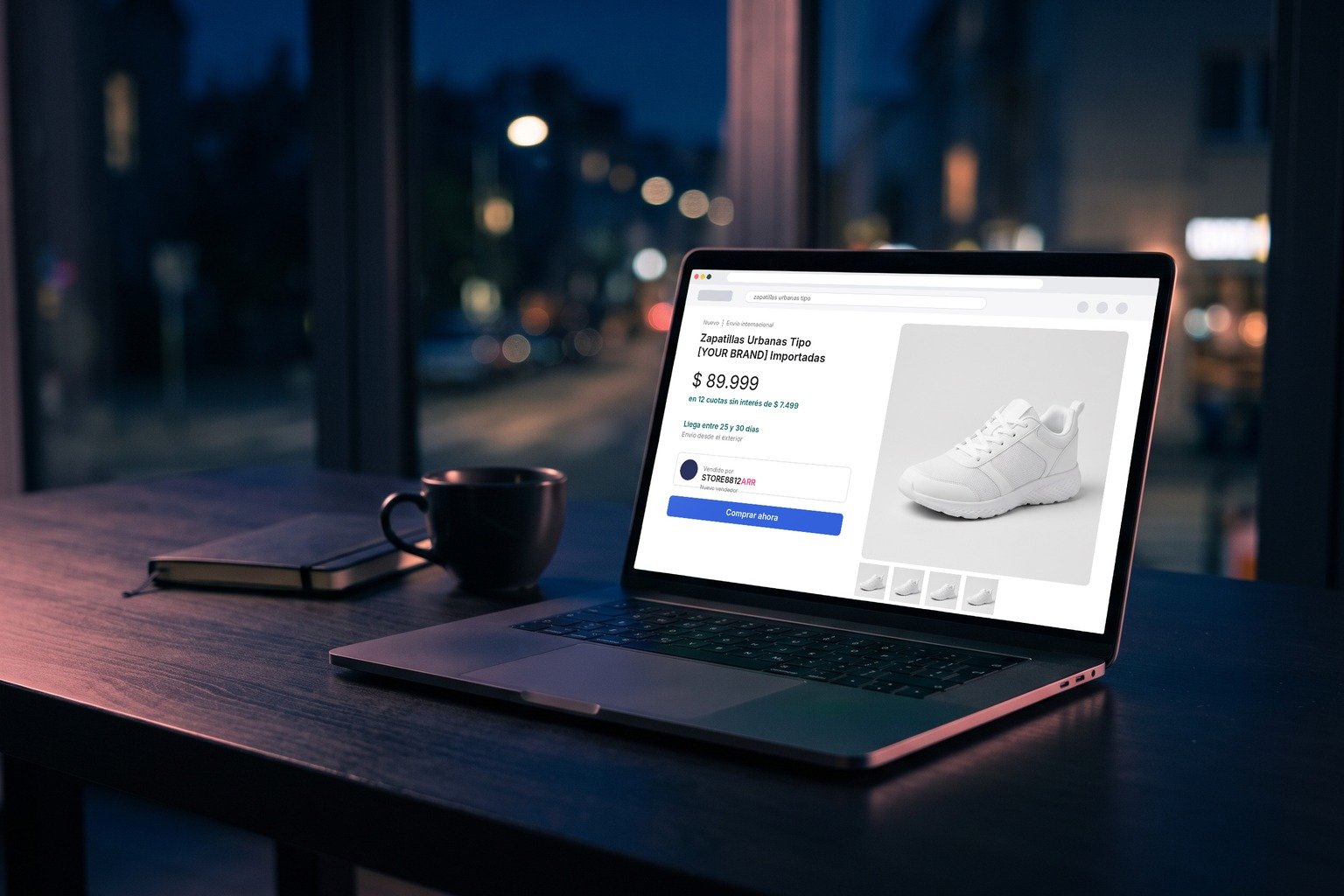
A listing that reads "zapatillas tipo [YOUR BRAND]" is telling the buyer, in a way everyone in Spanish-speaking Latin America understands, that the product looks like the brand without being it. "Estilo", "símil" and "réplica" do the same job, and in Brazil the word to look for is "similar".
These words rarely show up in a search for the trademark alone, so it helps to search the category the way a local buyer would, adding them one at a time. It's one of the simplest ways to find fake products that a keyword alert would miss.
Sometimes the image is the most convincing part of the listing, because it comes straight from the brand's own website. When that happens, a local moves on to what surrounds the photo: the title, the price and the store selling it.

In much of the region, people compare prices by the monthly payment as much as by the total. Argentina talks about "cuotas sin interés", Mexico about "meses sin intereses" and Brazil about "parcelado sem juros".
A copy often keeps the installment format that buyers trust while the total sits well below what the real product usually costs. Reading both numbers together is a quick way to see whether the price makes sense.
A store that seems new
What does the seller's page say? A store that opened recently, with only a few sales and a full catalog of one brand, is worth a second look, especially when the brand doesn't recognize it as an authorized seller.
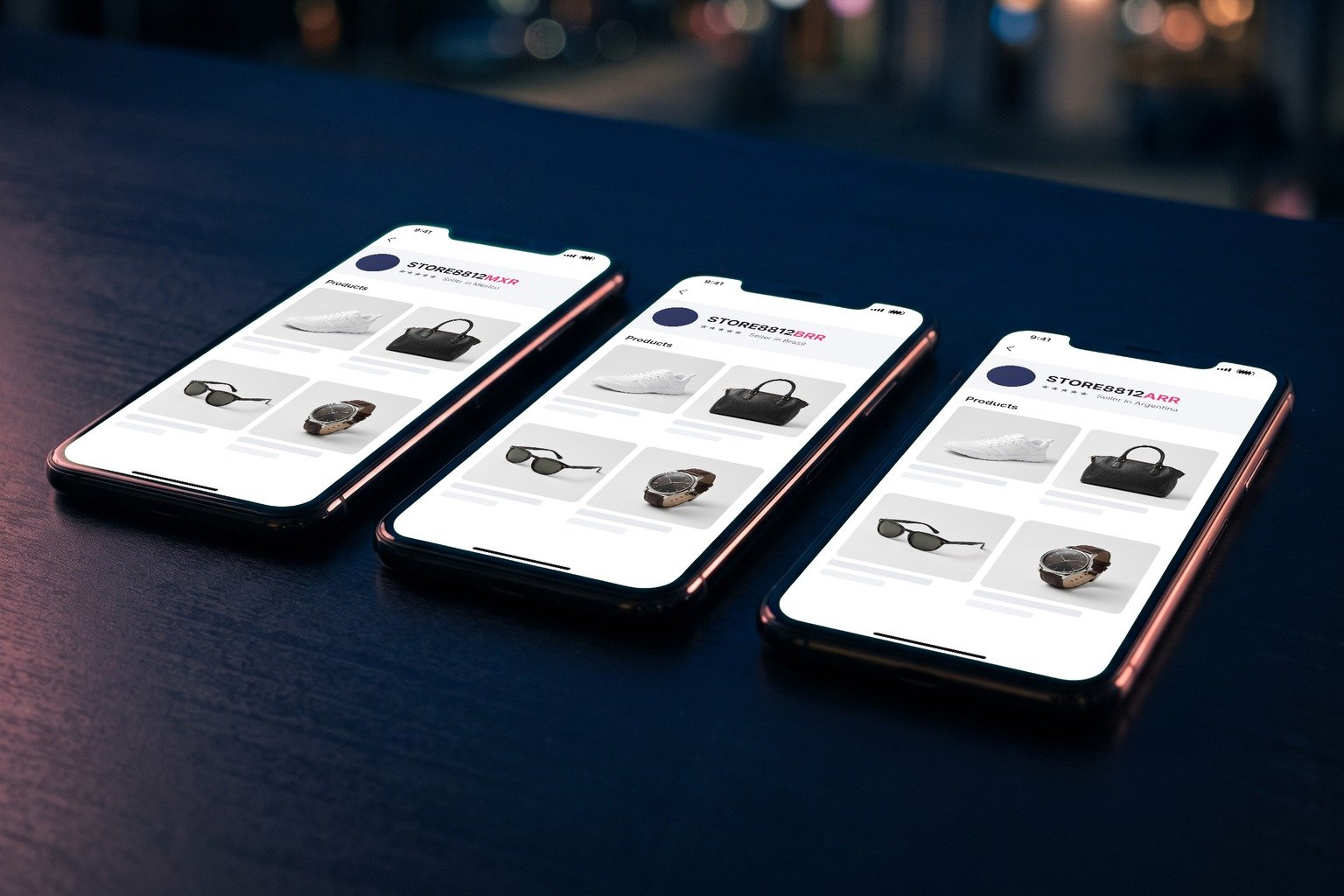
The name is worth reading too. Some stores open in a second country by changing only the last letters: STORE8812MXR in Mexico becomes STORE8812BRR in Brazil and STORE8812ARR in Argentina, with the same photos and the same descriptions. Seen one market at a time, each looks like a new seller. Read together, they turn out to be one familiar seller with a different accent.
The route before the listing
Delivery time says a lot. When a product that seems local takes weeks to arrive, or the title says "importado", the item probably crossed a border before it reached the listing. That route is often the first sign of a seller working in several countries at once.
Reading counterfeit signals together
Each of these signals can have a simple explanation on its own. A new store can be a legitimate reseller, and a good price can be a real sale. What a local looks for is the combination: a small word in the title, a borrowed photo, a price that doesn't add up and a store that has just arrived. When several of them show up in the same listing, it's usually worth a closer look.
Frequently asked questions
What is the first thing to check in a listing?
The title and the price, read together. A small word like "tipo" or "réplica" next to an installment price that sits far below the usual one is often the quickest sign.
Do these signals change from country to country?
Yes. The words, the way people pay and even the way stores are named change between Mexico, Brazil, Argentina and the rest of the region, so each market is worth reading with its own accent.
Is a low price enough to call a listing counterfeit?
Rarely on its own. A low price can be a real sale, and it becomes a stronger signal when it appears together with others, like a borrowed photo or a store that has just opened.
Every market has its own version of these signals, which is why it helps to read them with someone who knows the place. Ask a local.